Posts tonen met het label Groen van Prinsterer. Alle posts tonen

woensdag, oktober 17, 2012

Dutch orthodox-protestant parties and the ghost of the French Revolution


By Ewout Klei

Some events have had a great impact on history, creating a collective memory like the Second World War, or more recently 9/11. The impact of these events are not only inspiring many writers but also play an important role in the political debate even today. The memory of the Second World War separates good from evil in the Western world. Democracy, freedom of expression and toleration of ethnic minorities are right, while dictatorship, censorship and discrimination are wrong. The memory of 9/11 has a similar moral function. In the Western view democracy, patriotism and women’s rights are good, while terrorism, religious fundamentalism and a traditional patriarchal society are evil.

The aftermath of the French Revolution of 1789 created a collective memory in the nineteenth century impacting heavily the political debate. On the one hand, the ideals of the French Revolution – liberty, equality and brotherhood – contributed greatly to the development of three political ideologies: liberalism (freedom), socialism (equality) and nationalism (brotherhood). On the other hand, there were also political ideologies, which opposed the French Revolution and its ideals. Conservatism, developed by political philosophers such as the Anglo-Irish politician Edmund Burke, the French-speaking writer Joseph de Maistre and the German ecclesiastical lawyer Friedrich Julius Stahl, promoted traditional and Christian values and institutions and defended the privileges of both the nobility and the State Church.
In the Netherlands the French Revolution was heavily criticized by Guillaume Groen van Prinsterer, a devote Christian historian and politician. Groen was influenced by Burke and Stahl and promoted his own orthodox-protestant version of conservatism. But Groen didn’t call himself a conservative, a counter-revolutionary or a reactionary. He rejected the entire available spectrum of political positions, promoting a "radical alternative in politics, along anti-revolutionary, Christian-historical lines". The real political antithesis was not the antithesis between conservatism and progressivism, but the antithesis between belief and unbelief.
According to French revolutionaries sovereignty resides in the people and not in God. For this reason Groen condemned the French Revolution as unbelief, as a rebellion against the authority of God. Other revolutions, for example the Belgian Revolution of 1830 and the Spring of Nations of 1848, were also condemned by Groen. In fact, all revolutions and all non-Christian ideologies were considered unbelief, and therefore must be condemned. On the contrary, the Dutch Revolt in the sixteenth century against Spain was approved by Groen, because this was a Calvinist rebellion against Catholic Spain and the Dutch rebels acknowledged God’s sovereignty. Their rebellion was not motivated by revolutionary ideas but by Christian principles.

Groen is the godfather of the anti-revolutionary movement in the Netherlands. Not only the Anti-Revolutionary Party (1879-1980) of Abraham Kuyper (1837-1920) was part of this movement, but also the Christian-Historical Union (1908-1980) of A.F. de Savornin Loman (1837-1924), and small orthodox protestant parties like the SGP (Staatkundig Gereformeerde Partij, Reformed Political Party) (1918-), the GPV (Gereformeerd Politiek Verbond, Reformed Political Alliance) (1948-2000) and the RPF (Reformatorische Politieke Federatie ,Reformed Political Federation) (1975-2000).
ARP and CHU had often participated in the Dutch government. The ARP represented approximately 10% of the Dutch votes, the CHU 8%. Before World War II, they had a dominant role in Dutch politics because many Dutch still considered the Netherlands as a Protestant nation. After the war however the KVP (Katholieke Volks Partij, Catholic People’s Party) and the PvdA (Partij van de Arbeid, Labour) became dominant. In response to the secularization and the loss of votes, ARP, CHU and KVP decided to merge. In 1980 the Christian Democratic Appeal was founded, a Christian democratic party for Protestants and Catholics, but also for Muslims and other non-Christians. In its heyday the CDA represented 35% of the votes.
SGP, GPV and RPF together represented 5% of the Dutch votes. These small Christian parties were testimonial parties and focused on their principles, instead of adapting them to local or temporal issues in the pursuit of coalition government participation. They have a marginal role in Dutch politics. SGP, GPV and RPF believed they were the true heirs of Groen’s legacy.
Since the year 2000, GPV and RPF are merged into the ChristenUnie (ChristianUnion), representing 3% of the Dutch votes. The ChristenUnie did not want to stay a testimonial party. From 2007 to 2010, the ChristenUnie participated in a centre-left government coalition. The SGP too aspired more influence on the government. From 2010 to 2012, the SGP gave passive support to the centre-right minority coalition.


Figure 1: Protestant Parties in the Netherlands

This paper will research the function of the ghost of the French Revolution and the legacy of Groen van Prinsterer in the political ideology of the orthodox-protestant parties SGP, GPV, RPF and ChristenUnie from 1945 to today. Why was the French Revolution so important for the collective memory and identity for these parties, even after other big historical events, such as World War II and the September 11 attacks?

Fighting the ghost: Verbrugh’s vision
One of Neo Calvinism’s most interesting political philosophers is A.J. Verbrugh. He was the ideologue of the GPV and representing them from 1971 to 1981 as a Member of Parliament. Verbrugh developed the ideas of Groen, especially those concerning the ideal of the Christian State. Groen criticized the Dutch liberal constitution of 1848 because of its ungodly and revolutionary principles, but his criticism was only theoretical and he didn’t develop a real alternative. Verbrugh did. In response to the secular constitutions of the Netherlands and of France, he advocated a Christian constitution based on God’s Law.
The French constitution of 1791 was originated by the Declaration of the Rights of Man and the Citizen of 1789. This Declaration had a humanist spirit and advocated the political principles of the Enlightenment. Authority is not God-given but comes from the people, humans have inalienable human rights and society is made up of individuals with equal rights, instead of different groups with different privileges.
The French Declaration had a strong influence on the Dutch civil rights. In 1796, one year after the French armies invaded the Netherlands and the Batavian Republic was established, church and state became separated. Before 1796, only members of the Dutch Reformed Church were allowed to occupy public positions. Our first National Assembly however had catholic, Jewish and protestant dissenter representatives. However, when emperor Napoleon met his Waterloo at Waterloo and the House of Orange was back in the saddle, these liberal changes were made undone. After 1848 Catholics, Jews, protestant dissenters and new groups like atheists finally were emancipated , thanks to the new liberal constitution of Johan Rudolf Thorbecke.
Because of its influence on the Dutch constitution, Verbrugh gives much attention to the French Declaration in his magnum opus Universeel en Antirevolutionair (Universal and Antirevolutionary). The French revolutionaries borrowed familiar iconography of the Ten Commandments and wrote their Declaration on two tables of stone (see figure 2). This could be considered as a rebellion against God. For Christians the Ten Commandments are the Law of God, written by God himself. The Declaration on the other hand is the Law of Man, written by the representatives of the People.
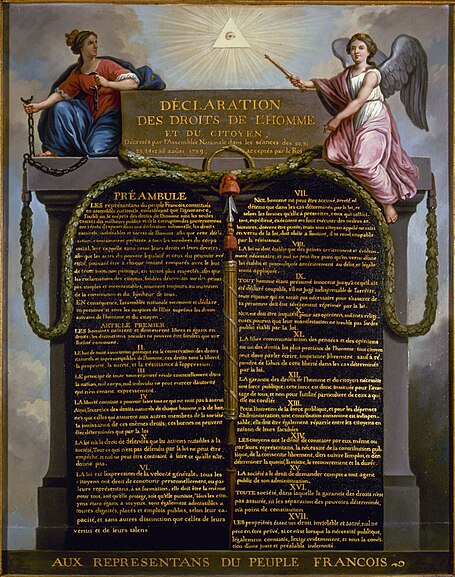

Figure 2: The Declaration of the Rights of Man and the Citizen (1789)

According to Verbrugh, a good constitution is based on the Law of God. Verbrugh therefore advocates a Christian constitution with an explicit reference to God. A Christian constitution protects the Christian State against the (possibly unchristian) will of the majority, in order to preserve the Christian identity of the nation.
For extra protection, Verbrugh promotes the establishment of a Supreme Court with authority to overrule democratic lawmaking by Parliament. The Supreme Court will be presided by the King, thereby increasing Royal political powers. The vision of Verbrugh is an attack on the separation of powers, defended by the French philosopher Montesquieu. The power of the legislature is strongly limited.
It is possible Verbrughs ideas for constitutional reforms were inspired by F.C. Gerretson, a far-right member of the CHU who in the Interwar Period flirted with fascism. In the year 1934 Gerretson wrote a controversial booklet called Koninklijk kabinet of dictatuur? (Royal Cabinet or Dictatorship?) In this pamphlet Gerretson advocated an authoritarian government, headed by the Dutch monarch, and wanted to limit the power of parliament. After the war Verbrugh advocated the same ideas and he called Gerretson a ‘Great Dutchman’, because of his staunch opposition to the decolonization of the Dutch East Indies and European integration.
In Universeel en Antirevolutionair Verbrugh makes perfectly clear that he is not in favor of a democratic government. He links democracy with popular sovereignty, which was fiercely condemned by Groen van Prinsterer. Verbrugh cites with approval a statement of Groen (who cited the Swiss protestant Alexandre Vinet) concerning the impossibility of a Christian democracy, because “in such a combination of words the noun devours the adjective.” According to Verbrugh, the Dutch political system is not a democracy but a constitutional monarchy with a parliament, universal suffrage important fundamental rights such as the freedom of religion. Despite the fact that Verbrugh opposes democracy, he does not advocate the idea of theocracy. Verbrugh advocates freedom of religion and opposes discrimination and persecution of religious minorities and does not want to revoke the civil rights of Catholics, Jews or even atheists. Furthermore, he rejects the idea of a State Church. The fact that the state should be a Christian State, does not mean that the State has to recognize one church as the true church.
For the GPV the ghost of the French Revolution was an important identity marker. In 1976 the party remembered Groen van Prinsterer, who had died in 1876. The GPV invited only the SGP for this commemoration, not ARP and CHU. According to Verbrugh, these two moderate protestant parties have betrayed the antirevolutionary legacy of Groen. “The Christian democratic parties have lost their chance to be strong in the fundamental debate, because they have surrendered themselves to the ideology of neutrality.”
A year later, during the general elections, the GPV attacked the CDA. In 1977 ARP, CHU and KVP still existed as separate political parties, but for the first time joined forces in the elections and formed a common list. Party leader Dries van Agt (a Roman Catholic) said at the congress of the CDA there were three ideological movement in the Netherlands: the liberals who were the party of freedom, the socialists who were the party of equality and last but not least the Christian democrats who were the party of brotherhood. The GPV fiercely condemned Van Agt. The Christian democrats now exposed themselves as a revolutionary party. The GPV of Verbrugh on the other hand was of course loyal to the antirevolutionary principles of Groen. In fact, the GPV was one of the few political parties who still resisted the dangerous ideas of the French Revolution and upheld the believe that all authority was God-given.
Verbrugh left parliament in 1981. Verbrughs successor Gert Schutte was not an intellectual but his colleague Eimert van Middelkoop, Member of Parliament from 1989 to 2002, was. Van Middelkoop considered himself as Verbrughs political pupil and defended his master’s voice both in parliament as well in the Groen van Prinsterer Stichting, the political think tank of the GPV. According to Van Middelkoop the Netherlands were ruled by a democratic consensus. Of course, the liberals of the VVD (Volkspartij voor Vrijheid en Democratie, People’s Party for Freedom and Democracy), the social-democrats of the PvdA, the social-liberals of D66 (Democraten 66, Democrats 66) and the Christian democrats of the CDA had different notions about some political issues, for example the economy and social policy. But in principle they shared the same democratic ideology. They were all heirs of the French Revolution. These democratic parties all supported the ideas of equality, the right of self-determination and popular sovereignty. Only GPV, SGP en RPF, the heirs of Groen van Prinsterer, resisted the dangerous democratic doctrine and remain true to their own beliefs. For this reason the small Christian parties were alienated by a democratic and secular majority who did not reckon with their conscientious contributions to the political debate.
It is worth mentioning that Van Middelkoop was more cautious than his mentor. He did not attack democracy as such, only the democratic consensus. Were Verbrugh uses Groen’s antidemocratic analysis to formulate an alternative political system, Van Middelkoop uses the analysis of both Groen and Verbrugh to portray the small Christian parties as endangered parties, marginalized by the majority. He hereby contributed strongly to the orthodox protestant self-image as a tiny group of faithful Christians in a secular society, threatened by a hostile majority who’s secret goal is to persecute them, an image GPV shared with SGP and RPF. Verbrugh himself did not use this image because he was an optimist who thought that his ideal of a Christian state was perhaps within reach. In response to the secularization of Dutch society the GPV became more pessimistic. Especially during the Purple Coalitions (1994-2002), when Christian parties for the first time since 1918 were excluded from government and euthanasia and same-sex marriages were legalized, the GPV feared that the ghost of the French Revolution had definitely won.
Concluding, the anti-democratic and anti-theocratic vision of Verbrugh makes his political philosophy quite unique. His political pupil Van Middelkoop uses his political philosophy in a different context and portrayed the small Christian parties as marginal parties, endangered by a democratic and secular majority. SGP and the RPF considered themselves as heirs of Groen too. The way they approach the French Revolution is quite similar, but also a bit different.

Fighting the ghost: Spiritual warfare
Verbrugh approached the French Revolution in a very elementary way: its constitutional legacy must be stopped, and therefore the state must introduce a Christian constitution. This approach can perhaps be explained by the rational Calvinist culture of the Reformed Churches in the Netherlands. All members of the GPV were members of this church. The theology of this church is strictly orthodox as well as rational. Liberal theology of course is fiercely condemned by liberated Reformed theologians, but humans are rational beings and are able to understand the Word of God.
In contrast to the culture of the GPV and the liberated Reformed pillar, the political cultures of the SGP and the RPF were less political, less rational and more spiritual. Nevertheless they shared with the GPV a similar self-image, of a group of true Christian who were marginalized or even persecuted by a hostile secular majority.
The SGP, established in 1918, was first led by hyper-calvinist theologians. In its early years the ultra-orthodox party warned against modernity, rejected the authority of both parliament and democracy and in its opinion, the Roman Catholic Church was the Antichrist. The party was in fact far more radical than the godfather of the antirevolutionary movement Groen van Prinsterer himself, who accepted parliament and tolerated (to a certain degree) the Roman Catholics. Reverend G.H. Kersten, the first party leader of the SGP, however often cites anti-Catholic quotes from the works of Groen. His main purpose was to show the ARP and the CHU that they have betrayed Groens legacy because they formed a government coalition with the Catholics. Under the leadership of Kersten the SGP was a true testimonial party. Kersten was a misunderstood prophet. In parliament nobody really listened to his warnings or took him seriously.
After World War II the SGP became less counter-revolutionary and more antirevolutionary. The party resisted the consequences of the cultural revolution of the sixties, especially feminism and gay rights. In their opinion, the cultural revolution of the sixties was a fruit of the French Revolution of 1789, driven by the same unbelief.
In 1989, remembering the 200th anniversary of the French Revolution, party leader Bas van der Vlies criticized the legacy of the French Revolution and condemned it in abstract, spiritual language. The French Revolution was the antipode of the Reformation of the 16th century. The Revolution was rebellion against God, the Reformation was submission to God. The French Revolution was human pride, “a new Tower of Babel”. According to Van der Vlies “The year 1789 was the year when the political emancipation of unbelief started.” Last but not least Van der Vlies criticized the Christian democratic party CDA, because this moderate Christian party was conciliating the revolution and did not resist. The noun democracy indeed ‘devours’ the adjective Christian.
The SGP was in favor of Calvinist theocracy. However the party realized that its political ideal was very difficult to achieve. Therefore, the party adopted a defensive strategy. The main purpose of the SGP was to uphold the rights and privileges of ultra-orthodox protestants Christians as a separate group, the ultra-orthodox Reformed pillar. Ultra-orthodox protestant parents must have the right not to vaccinate their children and have also the right to send their children to ultra-orthodox protestant elementary and secondary schools. Furthermore, in municipalities were the SGP do have a majority swimming pools and shops have to be closed at Sundays. Finally, the SGP wants to have the right exclude women to be elected in parliament.
The SGP feels threatened by progressive political parties as PvdA, D66 and GroenLinks (GreenLeft) and the feminist Clara Wichmann Fonds. They want to force the SGP to treat women equally as men, after all. The will of the secular majority in the Netherlands, who is quite intolerant towards the convictions and especially the practices of the SGP and the ultra-orthodox pillar it is representing, is interpreted in an antirevolutionary way. During the French Revolution the secular majority brought terror and persecuted Christians who upheld their convictions, the secular majority in the Netherlands is marginalizing these true Christians now and will persecute them in the future.

The RPF was even more spiritual in its criticism of the legacy of the French Revolution. The party called itself theocratic in spirit, but considered itself democratic in practice. In 1992 André Rouvoet of the Marnix van Sint Aldegonde Stichting, the party’s think-tank, formulated his vision in a quite different way as Verbrugh. Nevertheless his actual political vision was quite the same. He also advocated a Christian State with freedom of religion for minorities.
Members of the RPF were reformed protestants and evangelicals. The RPF had strong ties with evangelical organizations, like the EO (Evangelische Omroep, Evangelical Broadcasting Foundation), the EA (Evangelische Alliantie, Evangelical Alliance) and the EH (Evangelische Hogeschool, Evangelical College) in Amersfoort. Together with this organizations, the RPF formed its own pillar, the evangelical pillar.
The RPF and the evangelical pillar can both be compared with the Christian Right movement in the United States, where evangelical Christians fights a culture war against progressive values. The RPF saw itself not only as a political party in the strict sense, but as a broad social movement. Instead of a defensive strategy the party adopted an offensive, sometimes miliant strategy. The struggle against the legacy of the French Revolution was a culture war, a war against feminism, gay rights and ‘ungodly’ science (especially the Theory of Evolution). Groen van Prinsterers critic of the French Revolution was interpreted in an evangelical way. GPV and SGP were only fundamentalist in theology, the RPF was also fundamentalist in attitude.
Furthermore, like the other small orthodox protestant parties the RPF was very fearful of the majority rule. The RPF feared that secular democracy will end in tyranny, like the French Revolution. The democratic majority not only legislated laws, which were considered as unchristian (the Equal Treatment Act and the laws discussing abortion and euthanasia), but in the view of the RPF also threatened the rights of minorities (especially the rights of orthodox protestant Christians of course). According to R.H. Matzken, a philosophy teacher of the EH, Christians were discriminated by the secular society when they do not submit themselves to the humanist discourse.
During the Purple Cabinets many supporters of the RPF felt that Christians were being discriminated, when party leader Leen van Dijke was condemned to a fine of 300 guilders, because of the offending nature of remarks he made about homosexuals. In an interview in 1996, Van Dijke told that he considered homosexual people who practice their orientation as in the same category as swindlers. Van Dijke himself considered his case as a test case for the freedom of religion in the Netherland. “Are Christians still allowed to repeat what the Bible has to say about this?” In the year 2001 however, he was cleared by High Court. Because Van Dijke´s remarks were based on his religious conviction, he was allowed to make them. The Netherlands were not a secular tyranny yet.

The ghost after 9/11 and the Arab Spring

The Second World War had a relatively little impact on the political ideology of orthodox-protestant Christians. Political groups that identified themselves as antifascist were (radical) leftwing. Political values which became very important after this war, democracy and non-discrimination, were contested as revolutionary values by the orthodox-protestant parties.
The political-theological impact of 9/11 however was greater. The SGP became more and more critical about the Islam and developed a hostile attitude towards this religion. On the other hand ,the Roman Catholic Church was no longer seen as a threat. On the contrary, conservative Catholics like Mariska de Haas-Orbàn of the Katholiek Nieuwsblad (Catholic Newspaper) were even considered as allies. The old Calvinist slogan ‘Rather Turkish than Papist’ was replaced with the slogan ‘Rather Papist than Turkish’.
The SGP proposed a ban on minarets, because these were symbols of Islamic imperialism and a threat to Dutch (Judeo-Christian) culture. The Islamic minority of 800.000 people in the Netherlands are allowed to have freedom of conscience, but are denied freedom of religion. Because theocracy is nowadays associated with (fundamentalist) Islam, the SGP for opportunistic and strategic reasons does not use the word theocracy anymore. Party leader Kees van der Staaij called the SGP from time to time democratic, because his party has accepted democracy as a working model. Of course this does not mean that the SGP is truly democratic nowadays.
The vision of the ChristenUnie is more moderate. The party nowadays officially defends democracy, but interprets democracy in an orthodox protestant way and is still hostile towards the democratic principle of majority rule. According to the ideologues and representatives of the ChristenUnie, Muslim citizens in the Netherlands deserve the same civil and political rights as Christians. Nevertheless they considered (political) Islam as a dangerous threat to (their own limited interpretation of) democracy, but especially to Christians.
Former party ideologue senator Roel Kuiper, a political pupil of Verbrugh, in 2011 wanted an absolute ban on Sharia legislation in the Dutch constitution, a proposal which was hailed by the populist politician Geert Wilders of the far right PVV (Partij van de Vrijheid, Party for Freedom). For Kuiper, the democratic rule of law state (which he implicitly defined as Christian) was more important than the democratic principle of majority rule. Like Verbrugh he wanted to protect the Christian heritage of the Netherlands by constitutional reforms. Kuiper was afraid for the (theoretic) possibility that if Muslims formed a majority in the Netherlands they may pass legislation which threaten the Christian minority.
Interestingly, current party ideologue Gert Jan Segers, head of the Groen van Prinsterer Stichting, the political think-tank of the Christian Union, had compared Islam as a political ideology with secularism. In Islamic countries, the rise of Islamic fundamentalism after 9/11 and the Arab Spring threatened the civil rights of religious minorities, especially Christians, who are persecuted. In the Netherlands the rise of secularism threatened the freedom of religion. According to Segers, despite the fact that Christian are (not yet) persecuted, the Dutch situation may develop in the same direction.
Kees van der Staaij, leader of the SGP, subscribed Segers critical analysis of the situation of Christians in the Middle East during the Arab Spring. He invoked the ghost of the French Revolution explicitly when he wrote about the situation in Egypt after the fall of Mubarak: “In Egypt it is a time of transformation, a time of hope and fear. In such a time it is very important to draw clear lines, because it may all develop in the wrong way. After the French Revolution at the end of the eighteenth century the guillotine came. After the Iranian Revolution of the twentieth century there came a dreadful dictatorship.”

Conclusion
It is very interesting to see that despite the fact that history moves on, the historical analysis of the political situation stays the same. On the one hand, Dutch orthodox-protestant parties were very conservative antirevolutionary in their appreciation and condemnation of the French Revolution. Despite the fact that Groen van Prinsterer lived in the nineteenth century and the world has changed since then, GPV, SGP, RPF and ChristenUnie never criticized Groen’s analysis and maintained their vision.
On the other hand, the actualization of the French Revolution by the orthodox-protestant parties was flexible and they adapted their vision constantly. The French Revolution was relevant for Verbrughs analysis of the Dutch constitution, but it was relevant too for distinguishing themselves from the moderate Christian democratic parties and for their negative reaction to the cultural revolution of the sixties. Not only liberalism and socialism, but also feminism, the theory of evolution and gay rights were revolutionary. Furthermore, even the Arab Spring of 2011 was interpreted by the small orthodox-protestant parties in an antirevolutionary, Groenian way.
Two aspects of the French Revolution in particular were important for the Dutch orthodox-protestant parties: 1) The fact that the French Revolution had a secular fundament, that is was rooted in unbelief. 2) The fact that the French Revolution resulted in tyranny, and that majority rule is a dangerous threat for Christians. The first aspect has everything to do with the strive of Dutch orthodox-protestant parties to establish a Christian State, the dream of this parties to dominate the political theatre, despite the fact that his was of course impossible. The second aspect however has everything to do with the greatest fear of these parties, to be subjected to marginalization and persecution by a hostile society, and perhaps a hostile government.
Senator Gerrit Holdijk of the SGP cited once with approval a statement of the theologian A.A. van Ruler, who said that for Christians there were two political realities: theocracy or persecution of Christians. Van Ruler denied the possibility that a Christian minority can participate in a secular society and a secular political system. Both the ChristenUnie and the SGP call themselves democratic nowadays. It is, however, still difficult for them to accept democracy, because their minority opinions often conflict with mainstream opinions in the Netherlands, which are liberal and secular.
Finally, despite the fact that orthodox-protestant parties say they want to protect the rights of (Christian) minorities, they are often intolerant towards the so called double minorities, people who happen to be a minority of a minority. Within the SGP women do not fit the mold. And for the ChristenUnie the admission of homosexuals is a highly controversial issue. The SGP denies women the freedom to be elected in parliament and therefore equal rights, the ChristenUnie denies freedom and equal rights to homosexuals. The inner-party politics of both parties are therefore very antirevolutionary so to speak, because there too orthodox protestants fight the ghosts of French Revolution.


About Klei
Ewout Klei (1981) is specialized in political and religious history. He wrote his master thesis about the Dutch politician Joan Derk van der Capellen tot den Pol (1741-1784). This advocate of the American struggle for Independence and leader of the Dutch patriot movement deeply inspired the populist politician Pim Fortuyn (1948-2002). In 2011 Klei finished his Ph.D.-thesis about the Reformed Political Alliance, a small conservative Christian party in the Netherlands, with little political power but influenced the Dutch political history in their own way.


woensdag, augustus 08, 2012

Dutch orthodox-protestant parties and the ghost of the French Revolution


Ewout Klei

Some events have had a great impact on history, creating a collective memory like the Second World War, or more recently 9/11. The impact of these events are not only inspiring many writers but also play an important role in the political debate even today. The memory of 9/11 separates good from evil in the Western world. In the Western view patriotism and women’s rights are good, while terrorism, religious fundamentalism and a traditional patriarchal society are evil. The memory of the Second World War has a similar moral function. Democracy, freedom of expression and toleration of ethnic minorities are right, while dictatorship, censorship and discrimination are wrong.

The aftermath of the French Revolution of 1789 created a collective memory in the nineteenth century, which had great impact on the political debate. On the one hand, the ideals of the French Revolution – liberty, equality and brotherhood – lead to the development of three political ideologies: liberalism (freedom), socialism (equality) and nationalism (brotherhood). On the other hand, there were also political ideologies which opposed the French Revolution and its ideals. Conservatism, developed by political philosophers such as the Anglo-Irish politician Edmund Burke, the French-speaking writer Joseph de Maistre and the German ecclesiastical lawyer Friedrich Julius Stahl, promoted traditional and Christian values and institutions and defended the privileges of both the nobility and the State Church.
In the Netherlands the French Revolution was heavily criticized by Guillaume Groen van Prinsterer, a devout Christian historian and politician. Groen was influenced by Burke and Stahl but didn’t call himself a conservative, a counter-revolutionary or a reactionary. Groen rejected the entire available spectrum of political positions, promoting a "radical alternative in politics, along anti-revolutionary, Christian-historical lines". The real political antithesis was not the antithesis between conservatism and progressivism, but the antithesis between belief and unbelief. According to Groen, the French Revolution was in essence unbelief, a rebellion against the authority of God. Other revolutions, for example the Belgian Revolution of 1830 and the Spring of Nations of 1848, were also condemned by Groen. In fact, all revolutions and all non-Christian ideologies were considered unbelief, and therefore must be condemned. On the contrary, the Dutch Revolt in the sixteenth century against Spain was approved by Groen, because this was a Calvinist rebellion against Catholic Spain, motivated by Christian principles.
Groen is the godfather of the anti-revolutionary movement in the Netherlands. Not only the Anti-Revolutionary Party (1879-1980) of Abraham Kuyper (1837-1920) was part of this movement, but also the Christian-Historical Union (1908-1980) of A.F. de Savornin Loman (1837-1924), and small orthodox protestant parties like the SGP (Staatkundig Gereformeerde Partij, Reformed Political Party) (1918-), the GPV (Gereformeerd Politiek Verbond , Reformed Political Alliance) (1948-2000) and the RPF (Reformatorische Politieke Federatie, Reformed Political Federation) (1975-2000). These small Christian parties – together they represented 5% of the Dutch votes - believed they were the true heirs of Groen’s legacy. Since the year 2000, the GPV and the RPF are merged into the ChristenUnie (ChristianUnion ), representing 3% of the Dutch votes.
This paper will research the function of the ‘ghost of the French Revolution’ and the legacy of Groen van Prinsterer in the political ideology of the orthodox-protestant parties from 1945 to today. Why was the French Revolution so important for the collective memory and identity for these parties, even after other big historical events, such as World War II and the attacks of 9/11?

Fighting the ghost: Verbrugh’s vision
One of Neo Calvinism’s most interesting political philosophers is A.J. Verbrugh. He was the ideologue of the GPV and representing them from 1971 to 1981 as a Member of Parliament. Verbrugh developed the ideas of Groen, especially those concerning the ideal of the Christian State. In response to the secular constitutions of the Netherlands and of France, Verbrugh advocated a Christian constitution based on God’s Law.
The French constitution of 1791 was originated by the Declaration of the Rights of Man and the Citizen of 1789. This Declaration had a humanist spirit and advocated the political principles of the Enlightenment. Authority is not God-given but comes from the people, humans have human rights and society is made up of individuals with equal rights, instead of different groups with different privileges. In Universal and Antirevolutionary, Verbrugh gives much attention to the Declaration. The French revolutionaries borrowed familiar iconography of the Ten Commandments and wrote their Declaration on two tables of stone. This could be considered as a rebellion against God. For Christians the Ten Commandments are the Law of God, written by God himself. The Declaration on the other hand is the Law of Man, written by the representatives of the People.
According to Verbrugh, a good constitution is based on the Law of God. Verbrugh therefore advocates a Christian constitution with an explicit reference to God. A Christian constitution protects the Christian State against the (possibly unchristian) will of the majority, in order to preserve the Christian identity of the nation. For extra protection, Verbrugh promotes the establishment of a Supreme Court with authority to overrule democratic lawmaking by Parliament. The Supreme Court will be presided by the King, thereby increasing Royal political powers.
Verbrugh makes perfectly clear that he is not in favor of a democratic government. He links democracy with popular sovereignty, which was fiercely condemned by Groen van Prinsterer. Verbrugh cites with approval a statement of Groen (who cited the Swiss protestant Alexandre Vinet) concerning the impossibility of a Christian democracy, because “in such a combination of words the noun devours the adjective.” According to Verbrugh, the Dutch political system is not a democracy but a constitutional monarchy with a parliament, universal suffrage and important fundamental rights such as the freedom of religion. Despite the fact that Verbrugh opposes democracy, he does not advocate the idea of theocracy. Verbrugh advocates freedom of religion and opposes discrimination and persecution of religious minorities. Furthermore, he rejects the idea of a State Church. The fact that the state should be a Christian State, does not mean that the State has to recognize one church as the true church.
The anti-democratic and anti-theocratic vision of Verbrugh makes his political philosophy quite unique. Despite the fact that the SGP and the RPF considered themselves as heirs of Groen, the way they approached the French Revolution and the Dutch political context is somewhat different.

Fighting the ghost: Spiritual warfare
The GPV of Verbrugh approached the French Revolution in a very elementary way: its constitutional legacy must be stopped, and therefore the state must introduce a Christian constitution. This approach can be explained by the rational Calvinist culture of the Reformed Churches (Liberated). All members of the GPV were members of this church. The theology of this church is strictly orthodox as well as rational.
In contrast to the GPV, the SGP and the RPF were less political, less rational and more spiritual.
The SGP, established in 1918, was first led by hyper-calvinist theologians. In its early years the party warned against modernity, rejected the authority of both parliament and democracy and in its opinion, the Roman Catholic Church was the Antichrist. The party was in fact far more radical than the godfather of the antirevolutionary movement Groen himself, who accepted parliament and tolerated the Roman Catholics. After World War II however the SGP became less counter-revolutionary and more antirevolutionary. The party resisted the consequences of the cultural revolution of the sixties, especially feminism and gay rights. In their opinion, the cultural revolution of the sixties was a fruit of the French Revolution of 1789, driven by the same unbelief.
In 1989, remembering the 200th anniversary of the French Revolution, party leader Bas van der Vlies criticized the legacy of the French Revolution in general clichés. The French Revolution was the antipode of the Reformation of the 16th century. The Revolution was rebellion against God, the Reformation was submission to God. The French Revolution was human pride, a new Tower of Babel. According to Van der Vlies “The year 1789 was the year when the political emancipation of unbelief started.” Last but not least Van der Vlies criticized the Christian democratic party CDA (in 1989, this party had approximately 35% of the votes), because this moderate Christian party was conciliating the revolution and did not resist. The noun democracy indeed ‘devours’ the adjective Christian.
The SGP was in favor of Calvinist theocracy. However the party realized that its political ideal was very difficult to achieve. Therefore, the party adopted a defensive strategy. The main purpose of the SGP was to uphold the rights and privileges of orthodox protestants Christians as a separate group.

The RPF was even more spiritual in its criticism of the legacy of the French Revolution. The party called itself theocratic in spirit, but was democratic in practice. Like the GPV, the RPF advocated a Christian State with freedom of religion for minorities.
Members of the RPF were reformed protestants and evangelicals. The party had strong ties with evangelical organizations, especially the Evangelische Omroep (Evangelical Broadcasting Foundation).The RPF can be compared with the Christian Right movement in the United States, where evangelical Christians fight a culture war against progressive values. The RPF saw itself not only as a political party in the strict sense, but as a broad social movement. Instead of a defensive strategy, the party adopted an offensive strategy. The struggle against the Legacy of the French Revolution was a culture war, a war against feminism, gay rights and ‘godless’ science (especially the Theory of Evolution). Groen van Prinsterers critic of the French Revolution was interpreted in an evangelical way.
Furthermore, the RPF was very fearful of the majority rule. The party feared that secular democracy would end in tyranny, like the French Revolution. The democratic majority not only legislated laws, which were considered as unchristian (the Equal Treatment Act and the laws discussing abortion and euthanasia), but in the view of the RPF also threatened the rights of minorities (especially the rights of orthodox protestant Christians of course). According to R.H. Matzken, a philosophy teacher of the Evangelical College, Christians were discriminated by the secular society when they did not submit themselves to the humanist discourse.

The ghost after 9/11 and the Arab Spring
The Second World War had relatively little impact on the political ideology of orthodox-protestant Christians. Political groups that identified themselves as antifascist were (radical) leftwing. Political values which became very important after this war, democracy and non-discrimination, were contested as revolutionary values by the orthodox-protestant parties.
The political-theological impact of 9/11 however was greater. The SGP became more and more anti-Islam. The Roman Catholic threat was replaced by a Muslim threat and became political. The party proposed a ban on minarets, because these were symbols of Islamic imperialism and a threat to Dutch (Judeo-Christian) culture. Muslims are denied freedom of religion. However, they are allowed to have freedom of conscience.
In 2000, GPV and RPF merged into the ChristianUnion. The vision of this party is more moderate. According to the party, Muslim citizens in the Netherlands deserved the same rights as Christians, but (political) Islam was seen as a dangerous threat. Senator Roel Kuiper, a political pupil of Verbrugh, wanted an absolute ban on Sharia legislation in the Dutch constitution, a proposal which was hailed by the populist politician Geert Wilders. Interestingly, party ideologue Gert Jan Segers, head of the Groen van Prinsterer Foundation, the political think-tank of the Christian Union, compared Islam as a political ideology with secularism. In Islamic countries, the rise of Islamic fundamentalism after 9/11 and the Arab Spring threatened the civil rights of religious minorities, like Shiite Muslims and (of course) Christians who are persecuted. In the Netherlands, the rise of secularism threatened the freedom of religion. According to Segers, despite the fact that Christian are (not yet) persecuted, the Dutch situation may develop in the same direction.
Kees van der Staaij, leader of the SGP, subscribed Segers critical analysis of the situation of Christians in the Middle East during the Arab Spring. He invoked the ghost of the French Revolution explicitly when he wrote that the situation in Egypt after the fall of Mubarak may get worse: “After the French Revolution at the end of the eighteenth century the guillotine came. After the Iranian Revolution of the twentieth century there came a dreadful dictatorship.”

Conclusion

It is very interesting to see that despite the fact that history moves on, the historical analysis of the political situation stays the same. On the one hand, Dutch orthodox-protestant parties were antirevolutionary in their appreciation and condemnation of the French Revolution. On the other hand, their actualization of the French Revolution was flexible and they adapted their view on it constantly. The French Revolution was relevant for Verbrughs analysis of the Dutch constitution, but it was also relevant for their negative reaction to the cultural revolution of the sixties. Furthermore, even the Arab Spring of 2011 was interpreted by them in an antirevolutionary, Groenian way.
Two aspects of the French Revolution in particular were important for the Dutch orthodox-protestant parties: 1) The fact that the French Revolution had a secular fundament, that was rooted in unbelief. 2) The fact that the French Revolution resulted in tyranny, and that majority rule is a dangerous threat for Christians. The first aspect has everything to do with the ambition of Dutch orthodox-protestant parties to establish a Christian State, the dream of these parties to dominate the political theatre. The second aspect however has everything to do with the greatest fear of these parties, to be subjected to marginalization and persecution by a hostile society, and perhaps a hostile government.
It is still difficult for the orthodox-protestant parties to accept liberal democracy, because their minority opinions often conflict with mainstream opinions in the Netherlands, which are liberal and secular.


About Klei
Ewout Klei (1981) is specialized in political and religious history. He wrote his master thesis about the Dutch politician Joan Derk van der Capellen tot den Pol (1741-1784). This advocate of the American struggle for Independence and leader of the Dutch patriot movement deeply inspired the populist politician Pim Fortuyn (1948-2002). In 2011 Klei finished his Ph.D.-thesis about the Reformed Political Alliance, a small conservative Christian party in the Netherlands, with little political power but influenced the Dutch political history in its own way.

vrijdag, januari 22, 2010

Gereformeerd-vrijgemaakte geschiedenis en de distantie van de historicus

http://www.protestant.nl/actueel/gereformeerd-vrijgemaakte-geschiedenis-en-de-distantie-van-de-historicus


Gereformeerd-vrijgemaakte geschiedenis en de distantie van de historicus

Door: Ewout Klei

Historici kunnen goede columnisten zijn, maar dat heeft vaak meer te maken met hun scherpe pen dan dat ze zo objectief zijn. Toen ik in de Volkskrant van 11 januari j.l. Thomas von der Dunks artikel ‘De distantie van een historicus’ las, viel ik bijna van mijn stoel van het lachen. Von der Dunk is een gepromoveerd historicus, maar zijn polemische stukjes in de Volkskrant en Vrij Nederland zijn allesbehalve met distantie geschreven. Doctor Von der Dunk mag graag een beetje provoceren, dat is zijn goed recht en ik doe dat trouwens ook graag, maar hij moet niet denken dat de populaire politieke analyses in zijn columns van hetzelfde niveau zijn als wetenschappelijk onderzoek. Wetenschap en opinie zijn twee heel verschillende zaken.

Drie dagen voordat Von der Dunk zijn column schreef was ik op een congres van de Vereniging van Christen-historici, een groep historici die zich bezighoudt met christendom en geschiedschrijving. De in 1990 opgerichte vereniging had aanvankelijk een conservatief imago. De oprichters waren nogal gecharmeerd van de partijkiezende geschiedvisie van G. Groen van Prinsterer, de negentiende-eeuwse historicus en politicus die van mening was dat God, Nederland en Oranje onlosmakelijk met elkaar waren verbonden en ons land daarom een protestantse natie diende te zijn. De vereniging heeft tegenwoordig een meer wetenschappelijke koers ingeslagen, waardoor er meer distantie ten opzichte van het verleden mogelijk is.

Op het congres spraken een aantal wetenschappers en belangstellende leken met elkaar over het onderwerp ‘neutraliteit’ in de geschiedenis. Hoewel er in deze postmoderne tijden nog maar weinig wetenschappers zijn die denken dat hun wetenschap absoluut objectief is, verschilde men wel met elkaar van mening in hoeverre een (christen-)historicus objectief kan zijn en mag zijn. Mijn referaat ging over de vraag hoe ik als onderzoeker met een vrijgemaakt-gereformeerde achtergrond mij het beste kan verhouden tot mijn onderzoeksobject, het vrijgemaakte Gereformeerd Politiek Verbond. Is bij een onderwerp dat in zekere zin zo dichtbij staat, wel wetenschappelijke objectiviteit mogelijk?

Aan mijn luisteraars legde ik uit dat er in de vrijgemaakte historiografie, net als in de historiografieën van veel andere groepen, drie fasen zijn te onderscheiden: 1) de hagiografische fase waarin de identiteit van de groep wordt bevestigd; 2) de kritische fase waarin de identiteit van de groep wordt aangevallen en 3) de ‘objectieve’ fase waarin er niet aan identiteitspolitiek wordt gedaan. De laatste fase is volgens mij echter nog niet bereikt, omdat de vrijgemaakte zuil pas sinds de jaren negentig niet meer bestaat en geschiedschrijving over de vrijgemaakten nog contemporaine geschiedschrijving is.

Journalist en historicus Herman Veenhof, die in 2009 een biografie over de vrijgemaakte voorman Jongeling schreef, pretendeert mijns inziens ten onrechte dat zijn verhaal wel objectief is en het verleden helemaal recht doet. Hoewel Veenhofs biografie zeer leesbaar is en hij enkele onjuiste interpretaties van de kritische vrijgemaakte historici corrigeert, wordt Zonder twijfel toch te veel gedomineerd door “hier en daar wat heimwee” en is het specifiek geschreven voor de vrijgemaakte achterban. Met een populaire biografie is niets mis en Veenhof heeft een monument van formaat geschreven, maar zijn historiografische claim is wel een beetje misplaatst. Eigenlijk is hij gewoon teruggekeerd naar fase 1.

Hoe doe ik het dan? Ben ik wel objectief? Hoewel ik als wetenschapper natuurlijk probeer om een zo objectief mogelijk boek te schrijven en voldoende distantie probeer in acht te nemen, weet ik mede dankzij de colleges van de grote geschiedfilosoof Frank Ankersmit dat volledige objectiviteit niet alleen onmogelijk maar ook onwenselijk is. Als historicus maak je keuzes en probeer je nieuwe historische inzichten aan de vrouw/man te brengen. De historicus staat boven de bronnen en brengt daarin samenhang aan. Dat is subjectief maar niet erg.

Wel is er een verschil tussen de geschiedschrijving (Darstellung) en bronnenonderzoek (Forschung). Je moet wel eerlijk zijn tegenover je bronnen, je vooroordelen altijd kritisch toetsen en bronnen die daarmee in strijd zijn mogen niet worden genegeerd. Ik heb vanwege mijn vrijgemaakte achtergrond een bepaalde band met het vrijgemaakte verleden en dus ook met het GPV. Misschien neig ik soms te veel naar fase 2. Door mijn vooroordelen echter altijd kritisch te toetsen, alleen stelling te nemen als ik dit goed kan onderbouwen, geen morele oordelen te geven en als historicus open te staan voor kritiek van anderen in plaats van mijzelf op een voetstuk te zetten, trap ik hopelijk niet in de vuilkuil waar opiniemakers en populaire biografen intrappen, namelijk mijn verhaal als het laatste woord te zien. Of ik hier fase 3 helemaal mee bereik weet ik niet. Dat is iets voor de lezer straks.

Ten slotte, voordat ik vergeet te zeggen, dit is trouwens ook maar een column.

Ewout Klei, voor protestant.nl
21 januari 2010

zondag, mei 10, 2009

Eenheid en verdeeldheid van de orthodoxie in de negentiende eeuw

http://www.protestant.nl/geschiedenis/actueel-verleden/eenheid-en-verdeeldheid-van-de-orthodoxie-de-negentiende-eeuw


Historicus Ewout Klei bespreekt A. Houkes, Christelijke vaderlanders. Godsdienst, burgerschap en de Nederlandse natie (1850-1900). Wereldbibliotheek Amsterdam 2009 ISBN 9789028422803 344 pagina’s 19,90 euro

In haar proefschrift Christelijke vaderlanders betoogt historica Annemarie Houkes dat het moderne maatschappelijke leven in Nederland eerder geworteld is in religie dan in politiek. Na de scheiding van kerk en staat in 1848 zorgde religie voor de betrokkenheid van burgers bij politieke en maatschappelijke vraagstukken en voor de integratie van nieuwe groepen burgers in het publieke domein. De orthodox-protestanten staan in haar onderzoek centraal. Ze werden in de loop van de negentiende eeuw een maatschappelijke gemeenschap met een duidelijk wij-gevoel die via verschillende activiteiten een stempel op de samenleving probeerde te drukken. Aanvankelijk organiseerden de orthodox-protestanten zich alleen in de kerk en maatschappelijke organisaties. Pas later kwam de politiek in beeld.
Vanaf de jaren veertig van de negentiende eeuw werden allerlei orthodox-protestantse verenigingen opgericht die zich bezighielden met filantropie, evangelisatie en zending. Het ging niet zozeer om het verbeteren van de materiële levensstandaard maar om morele opvoeding en bekering tot het orthodoxe geloof, dat het ware geloof zou zijn. Orthodox-protestanten begonnen een gemeenschap van gelijkgezinden te vormen. De orthodox-protestantse gemeenschap werd het duidelijkst verbeeld in zendingsfeesten die manifestaties van macht en orthodoxe zelfbevestiging waren. De orthodoxen zagen zichzelf enerzijds als een groep die in Nederland werd onderdrukt: ze hadden geen zitting in het door liberalen gedomineerde bestuur van de Nederlandse Hervormde Kerk. Maar aan de andere kant beschouwden de kleine luyden zich als het ware volk van God, het nieuwe Israël.
Dat de liberale pers zo negatief was over deze zendingsfeesten had volgens Houkes te maken met de angst voor de potentiële macht van de orthodoxen. Hiermee kregen de liberalen in 1867 voor het eerst te maken toen in de hervormde kerk het algemeen mannenkiesrecht werd ingevoerd. De orthodoxen wonnen de verkiezingen en kregen zelfs de grote steden in handen. Politisering en polarisatie waren het gevolg. Kerkelijke kiesverenigingen werden opgericht en Abraham Kuyper en zijn aanhangers begonnen hun strijd tegen de vrijzinnigheid in de hervormde kerk.
Door zijn ramkoers kwam Kuyper in conflict met de vrijzinnigen, maar ook met orthodoxen die het niet eens waren met zijn agressieve stijl van optreden. Nadat Kuyper en zijn ‘gereformeerden’ de hervormde kerk in 1886 hadden verlaten ontwikkelden enkele hervormde theologen het concept van de ‘volkskerk’ waarin zowel orthodoxen als vrijzinnigen hun plek hadden. Politiek leidde de doleantie ook tot andere keuzen. Gereformeerden stemden op de strijdbare Antirevolutionaire Partij, hervormden op de gemoedelijke Christelijk-Historische Unie. Hervormden hadden niet zoveel op met politieke strijd en vonden inwendige zending en maatschappelijk hulpbetoon belangrijker. Dankzij de inzet van hervormden werd in 1911 een wet ter bestrijding van de zedeloosheid aangenomen waarin onder andere het bordeelverbod was opgenomen.
De dissertatie van Houkes is origineel en laat zien dat politieke - en religiegeschiedenis elkaar soms behoorlijk kunnen overlappen. Religie was in de tweede helft van de negentiende eeuw een belangrijke factor in politiek en maatschappij – niet louter conservatief, omdat de hervormde kerk met de invoering van het algemeen mannenkiesrecht in 1867 de Nederlandse staat precies vijftig jaar vooruit was. Houkes laat zien dat religie ook een belangrijke rol speelde bij de vorming van de natiestaat. Naast het individualistische liberale burgerschap ontstond ook een christelijk burgerschap, met een andere visie op hoe men een goede vaderlander kon zijn. Hoewel ondergetekende vanwege het exclusieve karakter van het christelijk burgerschap (goede Nederlandse burgers zijn christelijke burgers) meer sympathie heeft voor de inclusieve liberale visie, is de grote verdienste van de christelijke visie dat een nieuwe groep mensen politiek en maatschappelijk integreerde. Toch zorgde de grote nadruk van sommige orthodoxen op zuiverheid, vooral gepredikt door Kuyper, voor een nieuwe scheidslijn in de maatschappij. Nederland werd een verzuild land waarin elke religieuze en ideologische groep een eigen minisamenleving creëerde. Pas in de jaren zestig zou dit veranderen.
Auteur

Ewout Klei, voor Protestant.nl
6 mei 2009
Ewout Klei is verbonden aan het Archief- en Documentatiecentrum te Kampen en werkt aan een proefschrift over de geschiedenis van het Gereformeerd Politiek Verbond (persoonlijke weblog).

maandag, maart 09, 2009

Recensie: Christelijke vaderlanders

A. Houkes, Christelijke vaderlanders. Godsdienst, burgerschap en de Nederlandse natie (1850-1900). Wereldbibliotheek Amsterdam 2009. ISB 9789028422803. 344 pagina’s. 19,90 euro.

In haar proefschrift Christelijke vaderlanders betoogt historica Annemarie Houkes dat het moderne maatschappelijke leven in Nederland eerder geworteld is in religie dan in politiek. Na de scheiding van kerk en staat in 1848 zorgde religie voor de betrokkenheid van burgers bij politieke en maatschappelijke vraagstukken en voor de integratie van nieuwe groepen burgers in het publieke domein. De orthodoxe protestanten staan in haar onderzoek centraal. Zij werden in de loop van de negentiende eeuw een maatschappelijke gemeenschap met een duidelijk wij-gevoel, die via verschillende activiteiten een stempel op de samenleving probeerde te drukken. Aanvankelijk organiseerden de orthodoxe protestanten zich alleen in maatschappelijke organisaties en in de kerk. Pas later kwam de politiek in beeld. Houkes bespreekt achtereenvolgens de Aprilbeweging van 1853, christelijke filantropie, de evangelisatie, nationale zendingsfeesten, kerkelijke verkiezingen, de schoolkwestie en het hervormd alternatief voor partijvorming en verzuiling.
Begin negentiende eeuw was er nog geen georganiseerde orthodox-protestantse gemeenschap in Nederland. Er bestonden wel orthodoxe protestanten die zich apart groepeerden, de bevindelijken, maar zij zonderden zich af in conventikels. Verder waren er sinds 1834 de afgescheidenen. Rond 1900 echter hadden de orthodoxen zich enorm georganiseerd. Naast de erfgenamen van de Afscheiding in de Christelijk Gereformeerde Kerk waren er de Gereformeerde Kerken in Nederland bijgekomen, een fusie uit een deel van de CGK en de uit de 1886 ontstane Nederduitsche Gereformeerde Kerken. Verder waren er ook orthodoxe hervormden, waarvan een deel zich had georganiseerd in de Gereformeerde Bond. Al deze groepen hadden naast hun eigen kerken ook een eigen verenigingsleven op sociaal en politiek gebied. Ongeveer een derde tot maximaal de helft van de Nederlandse bevolking was orthodox-protestant, afhankelijk of je de ‘ethischen’ in de Nederlandse Hervormde Kerk er niet onder rekende of wel.
De opkomst van de orthodoxie had alles te maken met de invloed van het Réveil, een internationale opwekkingsbeweging waarin persoonlijke geloofsbeleving centraal stond. Ook kan de orthodoxie worden gezien als een reactie op de conservatief-liberale en later moderne theologie en op de hegemonie van de liberale predikanten en bestuurders in de kerk en godsdienstige verenigingen. Vooral na 1848 kreeg de orthodoxie de wind in de zeilen. De NHK was als gevolg van de grondwetswijziging van 1848 niet meer de door de overheid bevoordeelde publieke kerk en werd gedwongen om zich te bezinnen op haar nieuwe plek in de samenleving.
Politiek als wetgeving ging volgens Houkes pas leven bij de burger als ze zaken aanroerde op godsdienstig terrein. De Aprilbeweging van 1853, toen hervormde kerkenraden en kerkleden protesteerden tegen het herstel van de bisschoppelijke hiërarchie in ons land en de regering-Thorbecke, was daarom een bevestiging van de grondwet van 1848 en gaf de scheiding tussen kerk en staat vorm. De NHK, vroeger de publieke kerk, had meer afstand genomen ten opzichte van de overheid. Hoewel lang niet alle orthodoxen de Aprilbeweging steunden nam men wel de vorm van protesteren over. In 1856 protesteerden orthodox-protestantste predikanten en kerkleden via een petitie tegen de nieuwe schoolwet en dankzij de inzet van rechtzinnige kerkenraden werd het volkspetitionnement van 1878 een groot succes.
Vanaf de jaren veertig werden er allerlei orthodox-protestantse verenigingen opgericht die zich bezighielden met filantropie, evangelisatie en zending. Een belangrijke drijvende kracht hierachter was de orthodoxe predikant O.G. Heldring, een belangrijke voorman uit het Réveil. Orthodox-protestanten zetten zich in voor de armen en minderbedeelden. Het ging niet zozeer om het verbeteren van de materiële levensstandaard maar om morele opvoeding en bekering tot het orthodoxe geloof, dat het ware geloof zou zijn. Orthodoxe protestanten claimden het woord ‘christelijk’ exclusief voor zichzelf. Als je niet orthodox was, was je eigenlijk ook geen christen. De antithese van G. Groen van Prinsterer en A. Kuyper tussen geloof en ongeloof liep in werkelijkheid ook dwars door het christendom heen.
Een plek waar de orthodox-protestantse gemeenschap het best werd verbeeld waren de zendingsfeesten, die fungeerden als een soort EO-jongerendag en -familiedag avant la lettre. De zendingsfeesten waren tot de doleantie van 1886 interkerkelijk van opzet. De bezoekers, die dankzij de nieuwe treinverbindingen afkomstig waren uit heel Nederland, zongen samen psalmen en luisterden naar predikanten en andere sprekers die spraken over strijd. De zendingsfeesten waren op deze manier een manifestatie van orthodoxe zelfbevestiging en macht. De orthodoxen zagen zichzelf enerzijds als een groep die in Nederland werd onderdrukt, omdat de bestuurders van de NHK liberaal waren en de kleine luyden geen stemrecht hadden, maar aan de andere kant waren zij het ware volk van God, het nieuwe Israël. De politieke betekenis van de zendingsfeesten werd ingezien door vriend en vijand. Kuyper maakte er uitgebreid reclame voor zijn nieuwe, op 1 april 1872 opgerichte, krant De Standaard en de liberale pers schreef kritische reportages over de zendingsbijeenkomsten, die mij een beetje doen denken aan hoe tegenwoordig de EO-jongerendag door de seculiere pers wordt verslagen. De typeringen ‘fundamentalisten’ en ‘gristenen’ vielen niet omdat deze begrippen in de twintigste en eenentwintigste eeuw zijn bedacht, maar wel schreven de liberalen uitgebreid over ‘hel en verdoemenis’.
Dat de liberale pers zo negatief was had volgens Houkes mede te maken met de angst voor de potentiële macht die de orthodoxen hadden. In 1867 kregen de liberalen voor het eerst met deze macht te maken, toen in de NHKen het algemeen mannenkiesrecht werd ingevoerd. De orthodoxen wonnen en kregen behalve uiteraard het platteland ook de grote steden in handen. De kerkelijke verkiezingen zorgden voor politisering, er werden zelfs kerkelijke kiesverenigingen opgericht, en voor polarisatie, met name Groen, Kuyper en hun aanhangers wilden dat de kerk zou worden gezuiverd van alle niet-orthodoxe smetten.
Door zijn ramkoers kwam Kuyper in conflict met de vrijzinnigen maar vooral met de orthodoxen die het niet eens waren met zijn agressieve stijl van optreden. Kuyper noemde hen de ‘irenische partij’ die ‘politocofoob’ zou zijn. Toen in 1886 Kuyper en zijn ‘gereformeerden’ de NHK verlieten, Groen was inmiddels overleden en het is maar de vraag of hij zich ook vrijgemaakt zou hebben door mee te doleren, werd de identiteit van de overgebleven ‘hervormden’ vooral bepaald door het niet-kuyperiaans zijn. In reactie op Kuypers gereformeerde ‘vrije kerk’ ontwikkelden enkele hervormde theologen het concept van de ‘volkskerk’, een kerk waar orthodoxen en vrijzinnigen hun plek hadden. Ook politiek leidde de doleantie tot andere keuzen. Bijna alle gereformeerden van Kuyper steunden de in 1879 opgerichte Antirevolutionaire Partij, maar de hervormden stemden verdeeld. De in 1908 opgerichte Christelijk-Historische Unie, een unie van zelfstandige kiesverenigingen, kreeg niet de steun van alle hervormden en was alleen tijdens de verkiezingen actief. Hervormden hadden het niet zo op met politieke strijd en vonden goed bestuur veel belangrijker. Ze waren wel actief in de maatschappij maar meer op de manier van het Réveil, dus via inwendige zending en het helpen van mensen in nood. Dankzij de inzet van hervormden werd in 1911 een wet ter bestrijding van de zedeloosheid aangenomen, waarin onder andere het bordeelverbod was opgenomen.
De dissertatie van Houkes is origineel en laat zien dat politieke geschiedenis en religiegeschiedenis elkaar soms erg kunnen overlappen. Religie was in de tweede helft van de negentiende eeuw een belangrijke factor in politiek en maatschappij en niet louter conservatief, omdat de NHK met het algemeen mannenkiesrecht in 1867 de Nederlandse staat precies vijftig jaar vooruit was. Houkes laat zien dat religie ook een belangrijke rol speelde bij de vorming van de natiestaat. Naast het individualistische liberale burgerschap ontstond er ook een christelijk burgerschap met een andere visie op hoe men een goede vaderlander kon zijn. Ondergetekende heeft vanwege het exclusieve karakter van het christelijk burgerschap – goede Nederlandse burgers zijn christelijke burgers - meer sympathie heeft voor de liberale visie. De grote verdienste van de notie van een christelijk burgerschap is niettemin dat hierdoor een nieuwe groep mensen politiek en maatschappelijk is geïntegreerd. Christelijke vaderlanders biedt daarom meer dan alleen een beschrijving van een stukje geschiedenis.

Ewout Klei

zondag, november 19, 2006

Het communistische trekje van het GPV

Dit artikel stond in het Nederland Dagblad van zaterdag 11 november 2006.

door onze redacteur Willem Bouwman

Het royement van de ‘buitenverbanders’ uit het GPV is te vergelijken met de communistische zuiveringen in Oost-Europa. Dat vond C. Veenhof, en hij had ‘niet helemaal ongelijk’, meent historicus Ewout Klei. Op het Veenhof-congres houdt hij een kritische lezing over Veenhof en de politiek.

KAMPEN - Klei schrijft een proefschrift over de geschiedenis van het Gereformeerd Politiek Verbond (GPV) en komt in de archieven geregeld Veenhof tegen. Veenhof werd geen lid van het GPV, maar schreef wel een richtinggevend boek over de noodzaak van gereformeerde politiek: Kracht en doel der politiek, een inspiratiebron voor veel GPV-politici. Later kreeg Veenhof ruzie met het GPV.

Klei kraakt enkele kritische noten over Veenhof en de politiek. Zo vindt hij Veenhofs beroep op Groen van Prinsterer oneigenlijk. Klei: ,,Eerst beschreef hij Groen van Prinsterer als een voorloper van de Vrijmaking, omdat Groen streed voor vrijmaking van de Hervormde Kerk. Na 1967 zei hij dat Groen niet paste bij het GPV, omdat hij zich niet had vrijgemaakt van de Hervormde Kerk. Veenhof gebruikte Groen naar eigen behoefte, denk ik dan.’’Klei meent dat Veenhof mooie woorden sprak over de noodzaak van gereformeerde politiek, maar zich niet uitliet over de politiek van alledag.

,,Het is onze politieke roeping de Here te dienen en te loven, schreef Veenhof. Ik vind het een mooi ideaal, maar ik vraag me af wat een christenpoliticus er in de praktijk mee kan. Over de politieke praktijk hoorde je Veenhof niet. Hij was een dominee in de politiek, hij beperkte zich tot het getuigenis. Daarom zou hij vast akkoord zijn gegaan met mr. H.P. Medema, die vindt dat de ChristenUnie meer moet openstaan voor de Heilige Geest. Zo’n onpraktisch pleidooi zou hem zeker hebben aangesproken.’’

Klei roemt het spreektalent van Veenhof. ,,Hij bracht mensen tot bezieling. Dankzij Veenhof is P. Jongeling, de hoofdredacteur van het Gereformeerd Gezinsblad, zich meer met de politiek gaan bezighouden.’’
Veenhof werd geen lid van het GPV, mede om praktische redenen, meent Klei. ,,In Kampen bestond een Comité voor gereformeerde kiezers, dat zich nooit bij het GPV heeft aangesloten. Men vond dat een kiesvereniging autonoom moest zijn, los van een politieke partij. Veenhof was lid van het comité, Schilder ook. Ze konden geen lid worden van het GPV, omdat er in Kampen geen kiesvereniging was. Pas in de jaren zestig kwam er een, maar toen was Veenhof al ver bij het GPV vandaan gegroeid. In de jaren zeventig sloot het Comité voor gereformeerde kiezers zich aan bij de RPF.’’

Veenhof sprak grote woorden over het royement van de ‘buitenverbanders’ uit het GPV. Hij vergeleek het met de communistische zuiveringen in Oost-Europa, tot woede van GPV-leider P. Jongeling. Klei toont enig begrip voor Veenhof. ,,Aan de ene kant sloeg die vergelijking nergens op. In Oost-Europa werden dissidenten geliquideerd, ze kregen een nekschot. In het GPV werden dissidenten alleen maar geroyeerd. Aan de andere kant moet men het begrip ‘zuivering’ niet beperken tot Oost-Europa. Leden van de CPN die het niet met de partijlijn eens waren, werden er uitgezet en ook dat noemen we zuiveringen. In het GPV is eigenlijk hetzelfde gebeurd. Daarom had Veenhof niet helemaal ongelijk, toen hij het GPV met de communisten in Oost-Europa vergeleek.’’